
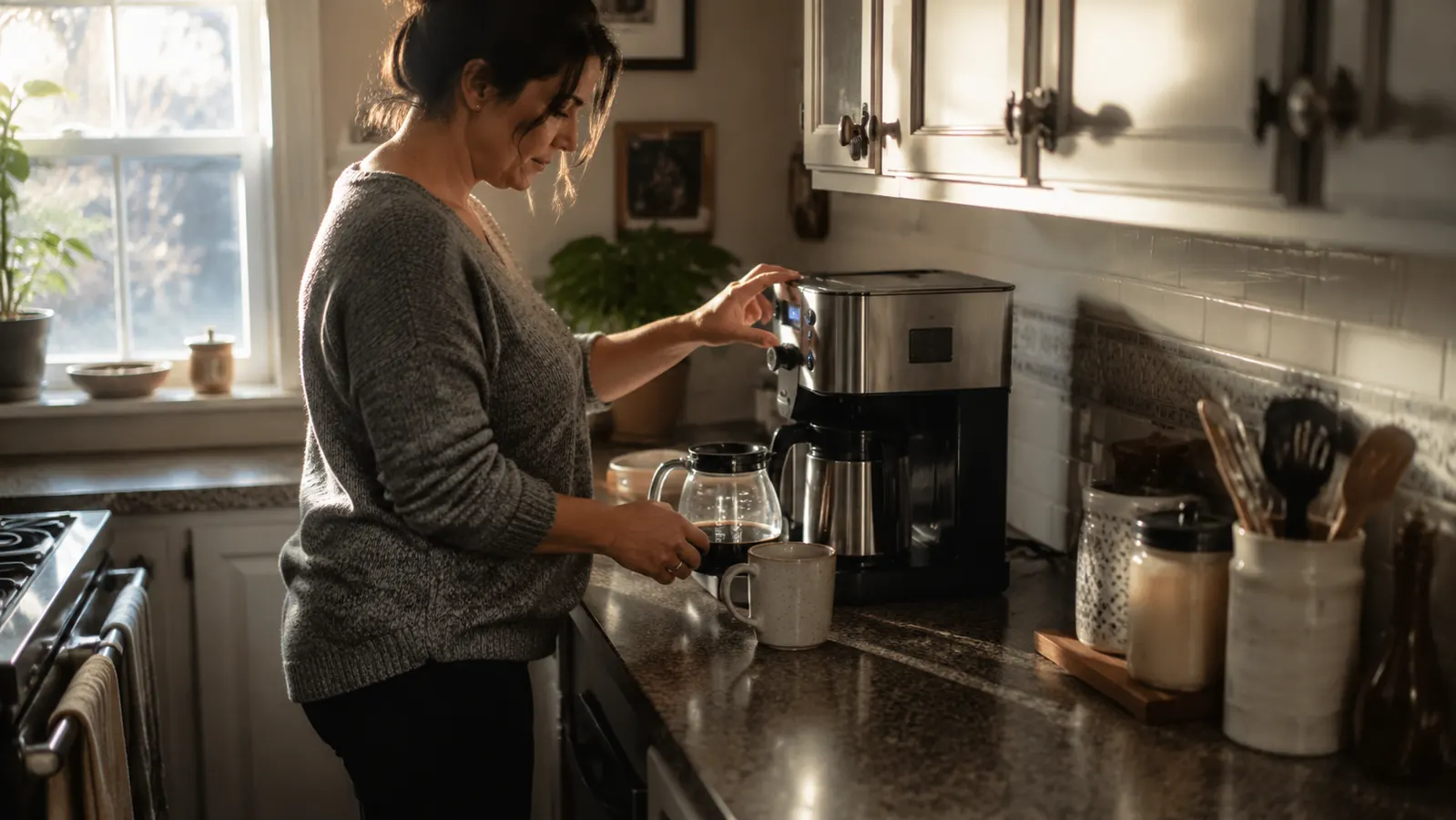
We bought the Hamilton Beach 2-Way Brewer in March, and it took me almost three full weeks to stop being a little annoyed with it. I want to say that up front because most reviews you'll read are written in the first two weeks, back when everything about a new appliance still feels like a small miracle. I'm writing this five months in, after the honeymoon wore off, after I learned the hard way what the box doesn't tell you, and after I watched my husband Paul nearly send this thing back to Amazon over something so small it's almost embarrassing to admit.
This is not the long version of the story. I already wrote up how this coffee maker has actually performed over five months of daily use if you want the day-to-day account. This one is different on purpose. This is the honest version, the annoyances, the learning curve nobody warns you about, and exactly why some people end up boxing this thing back up and returning it.
The Quick Verdict
A genuinely useful two-sided coffee maker once you get past a real learning curve, but the single-serve side has quirks the box never mentions, and it isn't the plug-and-play machine some buyers expect.
Amazon Check Today's Price →Tired of choosing between a coffee maker that only does one cup or one that wastes half a pot?
That was our exact standoff every morning before March. The 2-Way Brewer lets you make one mug for a rushed weekday or a full 12-cup pot for a slow Saturday, from the same machine. See today's price and current availability before you decide.
Amazon Check Today's Price on Amazon →How I've Used It
For context, our mornings are split. Paul leaves for work by 6:30 and needs one mug, fast, no fuss. I'm usually still in the kitchen an hour later getting Jack, who's 11, and Nora, who's 8, fed and out the door, and on weekends the four of us plus whoever's visiting need a full pot, not a single mug repeated four times. That's the exact problem this machine was supposed to solve, one appliance instead of the two coffee makers we used to keep crammed onto three feet of usable counter.
It does solve that problem. I want to say that clearly before I get into everything that annoyed me, because the core idea works. But solving the big problem and being frustration-free every single morning are two different things, and this review is about the gap between those two.
The first week, I brewed almost exclusively on the single-serve side, since that's what we use most days. It was the second week, when I finally ran a full pot for my sister-in-law's visit, that I discovered how much I'd been guessing at settings without realizing it, because the manual buries some of this information on page 11 instead of anywhere near the front.
I'll admit I almost didn't write this review at all, because five months in feels late to still be figuring out quirks on a coffee maker. But that's exactly the point. The stuff that trips people up doesn't show up in week one, it shows up once you've settled into a routine and the Hamilton Beach stops getting your full attention. That's when the shortcuts you didn't know you were taking start to matter.
What the Box Doesn't Tell You
Here's the first thing that got me. The single-serve side and the carafe side each have their own separate water reservoir, and nowhere on the box, and barely in the quick-start card, does it explain that filling one side does absolutely nothing for the other. I ran the single-serve side dry twice in the first ten days because I assumed, wrongly, that topping off the carafe reservoir in the morning meant the whole machine was full. It isn't one shared tank. It's two.
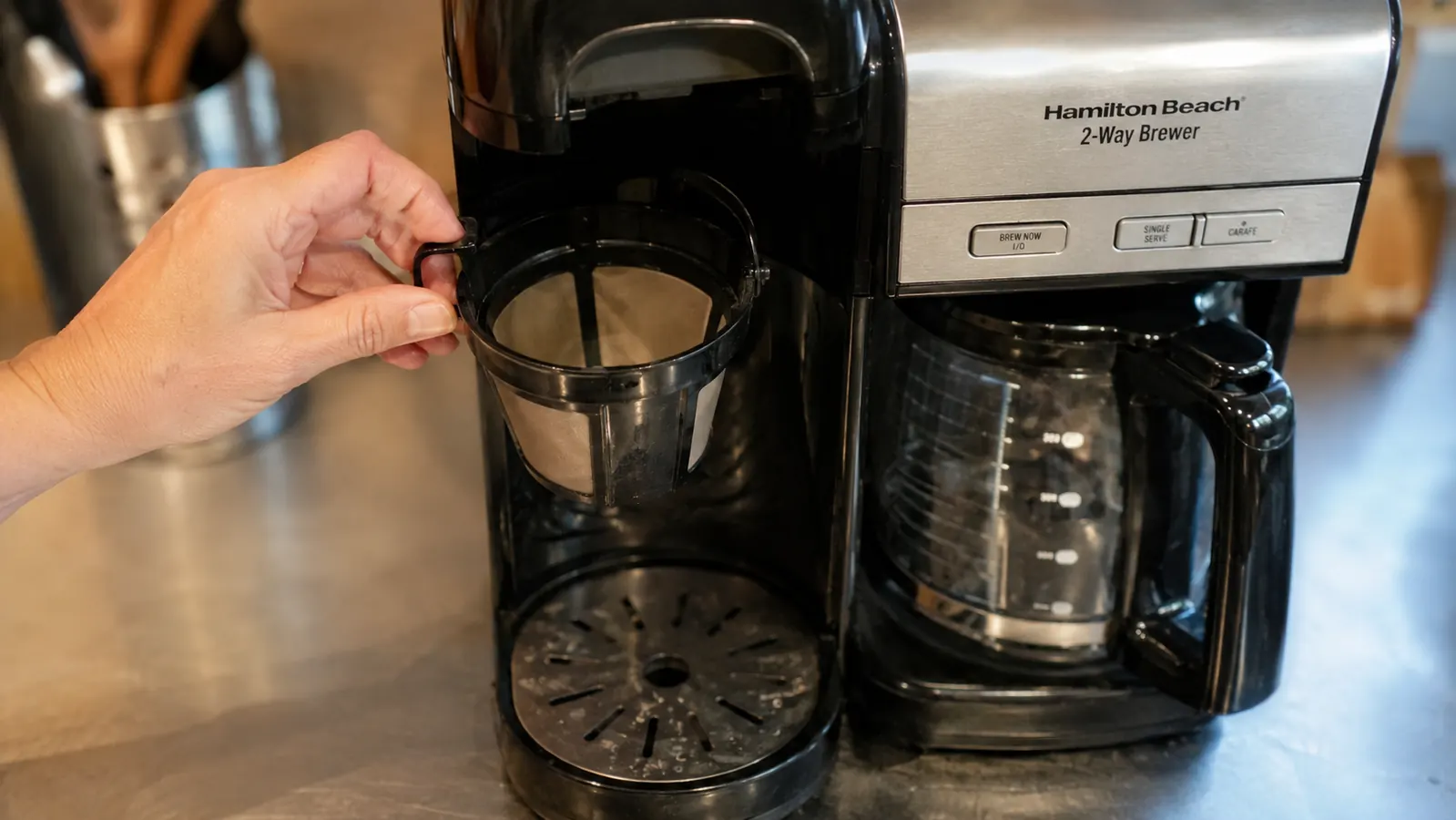
The second thing is the reusable filter basket on the single-serve side. If you want to use your own ground coffee instead of a pod, which is what we do most days since it's cheaper, you have to seat that little basket exactly right or the water channels around it instead of through the grounds, and you get a weak, almost gray cup that tastes like slightly warm water. Nobody tells you this. I figured it out by trial and error over about four brews, and Paul, who is not a patient man before his first cup, was not thrilled during that stretch.
Third, and this one actually made me laugh, there's no programmable start timer on this model. I assumed a two-sided coffee maker at this price point would let me set it up the night before to start brewing at 6am. It doesn't. You start it yourself, every single time, which means someone still has to be awake and standing in the kitchen to press the button. If a delay-brew timer is a dealbreaker for you, this isn't advertised clearly enough, and I'd have wanted to know that before buying it, not after.
The Annoyances Nobody Warns You About
The single-serve side is loud. Not unbearably loud, but there's a gurgling, almost sputtering sound near the end of a brew cycle that startled Nora the first few mornings, enough that she asked if something was broken. It isn't broken. It's just how this side finishes a cup, and five months in, it still does the exact same thing every time. If your kitchen is small and open to the rest of the house the way ours is, you'll hear it every morning, whether you want to or not.
The drip tray underneath the single-serve spout is shallow, shallower than I expected from the marketing photos. A standard ceramic mug fits fine, but Paul's tall insulated travel mug does not clear the space without removing the tray entirely first, which the manual mentions almost as an afterthought. The first time he tried to brew straight into his travel mug without pulling that tray, he ended up with coffee running down the side of the Hamilton Beach and onto our counter at 6:15 in the morning, which is not a great way to start anyone's day.
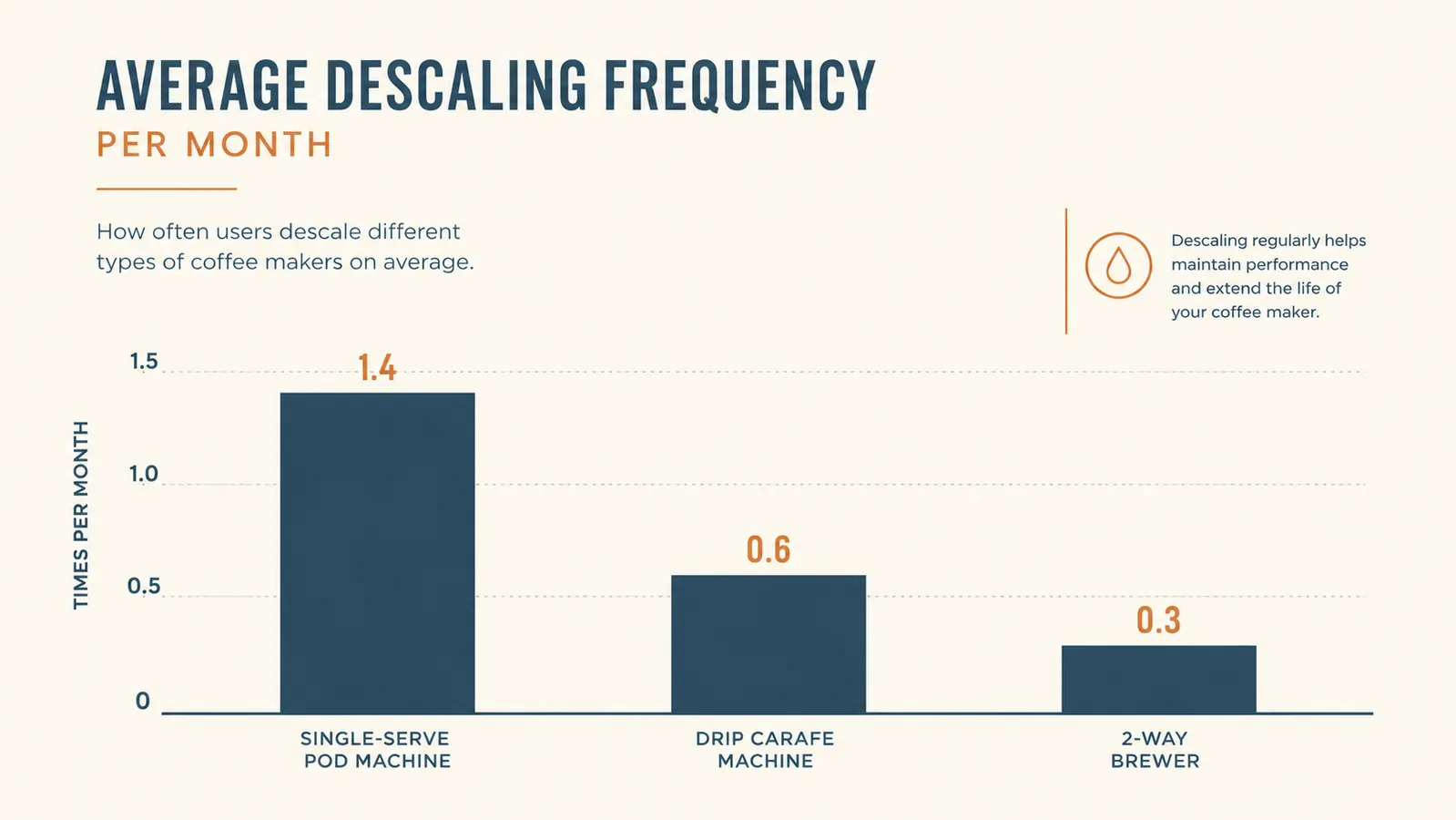
Descaling is the other thing that surprised me. I knew, in theory, that any machine that heats water builds up mineral deposits over time. What I didn't expect was how quickly the single-serve side in particular started to slow down, brewing noticeably slower by around week six, until I ran a vinegar-and-water descale cycle. Hamilton Beach recommends this roughly once a month depending on your water hardness, and our well water runs harder than city water, so we're closer to every three weeks. That's maintenance time the box copy glosses right over.
The carafe warming plate is the last honest annoyance. It keeps a full pot hot, which is exactly what it's supposed to do, but leave coffee sitting on it past the 45 minute mark and it starts tasting scorched and a little bitter. I learned to just brew smaller batches later in the morning instead of one big pot that sits around, but that's an adjustment nobody tells you to make going in.
Where People Actually Return It
I went looking through other reviews after our own rough first few weeks, partly to see if we were doing something wrong, and a pattern showed up that matches what we lived through. People coming from a straightforward pod machine, expecting the same drop-a-pod-and-walk-away simplicity on the single-serve side, get tripped up by the reusable filter basket and either never bother learning it or brew consistently weak coffee and assume the machine is faulty. It isn't faulty. It's just a different learning curve than a single-purpose pod brewer, and if you compare it side by side the way I did in my write-up against a Keurig Mini, that tradeoff becomes pretty clear.
The second group who return it are people expecting a programmable start timer, since a lot of two-sided brewers at similar prices do include one, and this model doesn't. If a set-it-and-forget-it morning routine is the whole reason you're shopping in this category, that's worth knowing before you click buy, not after the box is already open on your counter.
The third pattern is smaller households who only ever use the single-serve side and never touch the carafe. For them, half the machine's footprint on the counter is dead weight they're paying for and never using, and I understand that frustration completely, since counter space is the one thing we don't have extra of in this house.
The Learning Curve, Week by Week
If I could hand my March self one page of notes, it would look roughly like this. Week one is spent figuring out that there are two reservoirs, not one, and that the single-serve side runs dry faster than you'd guess because it's a smaller tank than the carafe side. That week is mostly about not being caught off guard mid-brew with an empty light blinking at you while everyone's waiting on coffee.
Week two is the reusable filter basket. This is where most of the frustration lives, and it's also where most people either push through or quietly give up and switch to pods for good, which is a perfectly fine outcome, but it does mean paying more per cup going forward. I pushed through because the cost savings mattered to us, and by the end of that second week I had the grind size and the basket seating figured out well enough that the weak, watery cups stopped happening.
By week four, the routine settles. You stop thinking about it and just use it, which is honestly the whole point of buying an appliance in the first place. The annoyances I listed above didn't go away, the noise is still the noise and the drip tray is still shallow, but they stopped being surprises and started being just part of how this particular machine works. That's the honest arc of it: rough two weeks, workable by week four, unremarkable by month two.
What Surprised Me in a Good Way
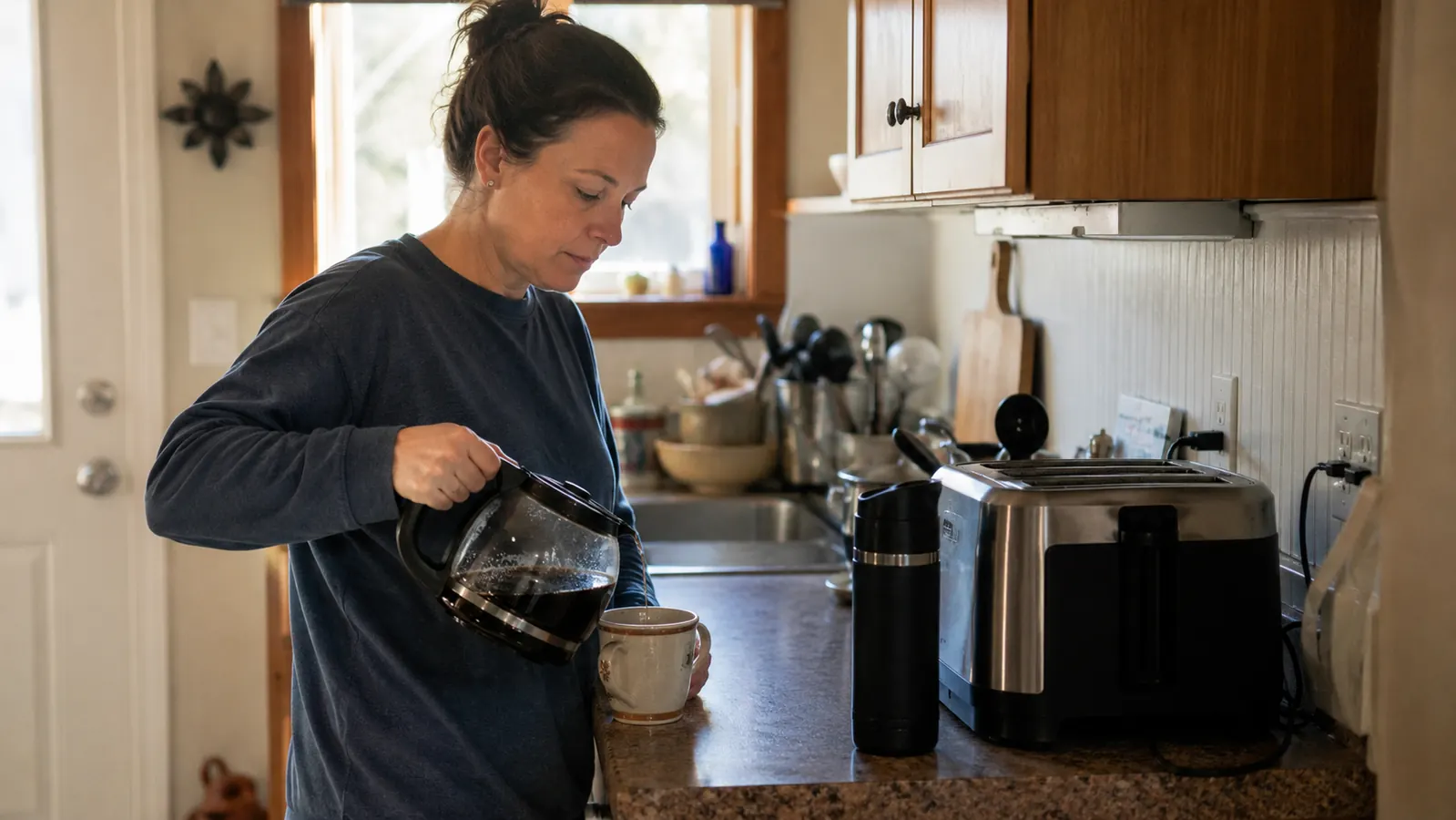
It's not all annoyances, and I don't want this to read like a takedown, because five months in, this machine is still the one making our coffee every single morning. The single-serve side, once I actually learned it, brews a genuinely good, full-strength cup with the reusable filter, not the watered-down version I got those first shaky days. And running both sides in the same week without hauling out a second appliance has been the actual win we bought this for.
The carafe side has also held up better than I expected on the durability front. Five months of near-daily brewing, and the glass carafe hasn't cracked, the handle hasn't loosened, and the hot plate still holds temperature the same way it did in March. For a machine at this price, that's not nothing.
What I Liked
- Genuinely solves the one-mug versus full-pot standoff in a household with different coffee needs
- Full-strength single-serve cup once you learn the reusable filter basket
- Carafe side held up with zero durability issues after five months of daily use
- Two separate reservoirs mean you're not forced to choose one mode per fill
- Compact enough to earn its spot on a genuinely small counter
Where It Falls Short
- No programmable start timer, despite the price point suggesting one
- Two separate water reservoirs, not obvious from the box, easy to run one dry by accident
- Reusable filter basket has a real learning curve before it brews full strength
- Single-serve side gurgles loudly at the end of every brew cycle
- Shallow drip tray doesn't clear a tall travel mug without removing it first
- Descales faster than expected with hard water, roughly every three weeks for us
Nobody warns you that the hardest part of a two-sided coffee maker isn't choosing which side to use. It's learning that each side has its own rules, and the box just assumes you'll figure that out on your own.
Who This Is For
This is for a household like ours, where one person wants a fast single mug on a weekday and the whole family wants a real pot on the weekend, and you're tired of two separate machines fighting for the same three feet of usable counter. It's also a good fit if you're willing to spend the first couple of weeks actually learning the reusable filter basket instead of giving up on day three. If you want the fuller day-to-day picture of how it's held up, that's in my long-term review.
Who Should Skip It
If you need a programmable start timer so coffee is ready the second you walk into the kitchen, look elsewhere, because this model doesn't have one. And if you only ever brew for yourself and will never touch the carafe side, you're paying for capacity you won't use, and a simpler single-serve machine will save you both money and a learning curve you don't need. Be honest with yourself about which one you actually are, and about whether you have the patience for those first rough couple of weeks, before you buy.
Five months in, the annoyances are real, but so is the problem it actually solves.
If your kitchen has been running two separate coffee makers just to keep everyone happy, it might be worth checking today's price while it's still in stock.
Amazon Check Today's Price on Amazon →