
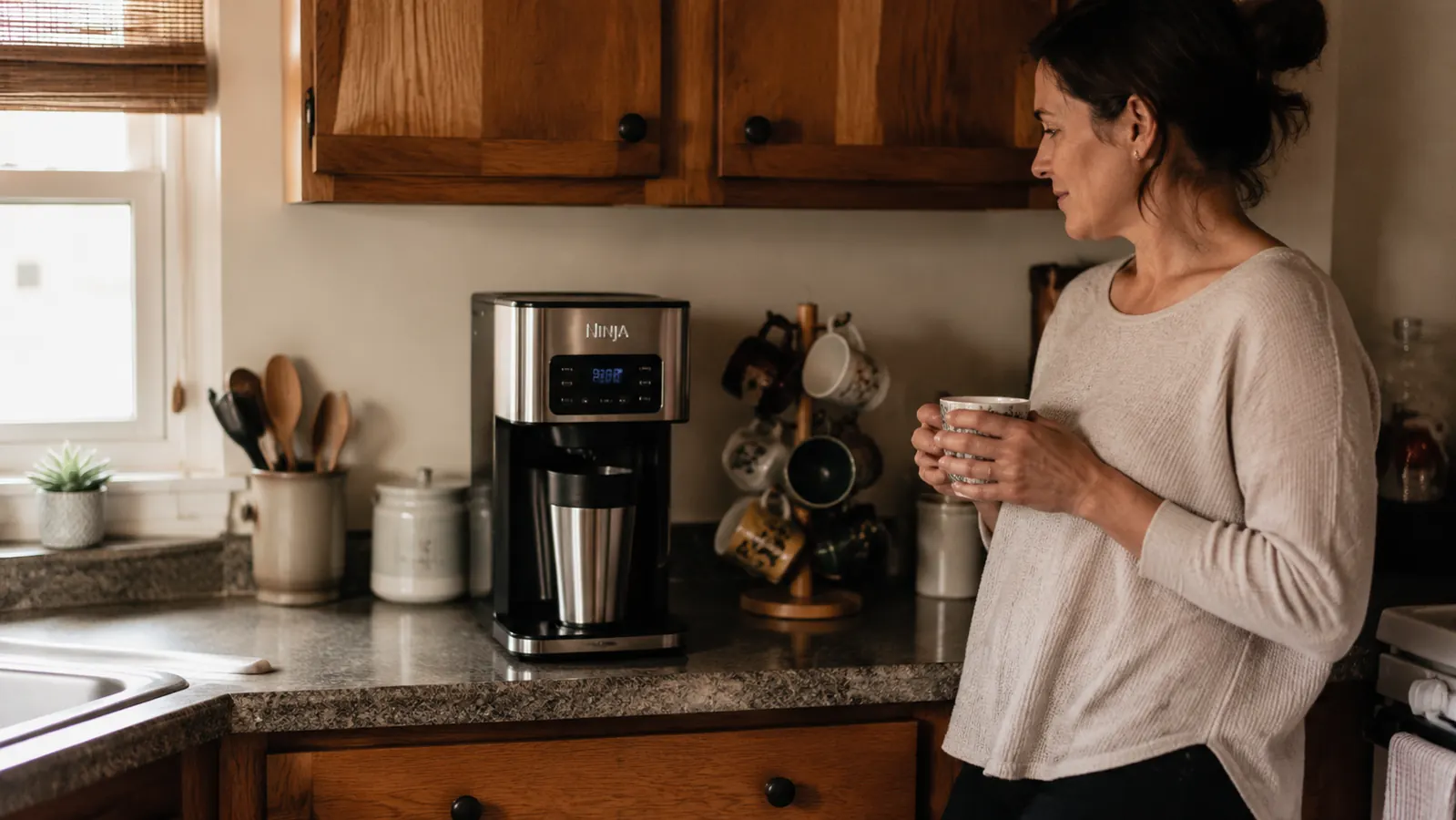
Some mornings in my galley kitchen with three feet of usable counter, I need one travel mug ready in under two minutes before Jack's bus shows up. Other mornings, Paul's parents are in the guest room and I need a full 12-cup pot going before anyone else is even awake. For years I owned two separate machines to solve those two problems, until I brought home the Hamilton Beach 2-Way Brewer in March specifically because it claimed to handle both from the same countertop footprint. Five months in, here's exactly how I use it to brew a single cup on a rushed Tuesday and a full carafe on a Saturday with company, without swapping appliances or guessing at settings.
The whole reason this matters in a kitchen with three feet of usable counter is that a second coffee maker isn't really an option here. I don't have the space for a single-serve pod machine sitting next to a separate drip carafe machine, so when I need to brew a single cup for myself before drop-off and a full carafe for weekend guests, it has to be the same unit doing both jobs. If your kitchen runs small the way mine does, this is the actual workflow, step by step, that gets you from an empty water reservoir to a hot single cup or a full carafe in the fastest, least fussy way I've found.
Tired of choosing between a pod machine for one and a full pot for the family?
That's the exact tradeoff I was stuck making every morning before March. The Hamilton Beach 2-Way Brewer switches between a single cup and a full 12-cup carafe without you buying, storing, or plugging in a second machine. See today's price and current availability before you decide.
Amazon Check Today's Price on Amazon →Step 1: Decide Single Cup or Full Carafe Before You Fill the Reservoir
The first decision every morning is whether I'm brewing a single cup or a full carafe, because the Hamilton Beach 2-Way Brewer wants to know that before you add water, not after. If it's just me before the school run, I fill the reservoir side that feeds the single-serve pour-through, drop in the reusable filter, and skip the glass carafe altogether. If Paul's parents are staying over or I'm hosting the neighborhood moms for coffee, I fill the full water tank instead and set the carafe underneath, because a full carafe needs the larger reservoir filled to the line that matches how many cups I actually want.
Mixing this up is the one mistake I made twice in the first two weeks. I filled the reservoir for a full carafe and then tried to brew a single cup into my travel mug, and ended up with lukewarm, weak coffee because the machine was still metering water for a 12-cup carafe instead of one cup. Now I check which side I'm using before I touch the power button, every single time, whether I want one cup or a full pot.
By the second week of March I had it down to muscle memory. I glance at the clock, I glance at how many mugs are sitting on the drying rack, and that tells me whether the Hamilton Beach 2-Way Brewer is about to run a single cup or a full carafe before I've even reached for the bag of grounds. That thirty seconds of deciding up front is the whole trick to never brewing the wrong amount.
Step 2: Load the Right Filter for a Single Cup or the Full Carafe
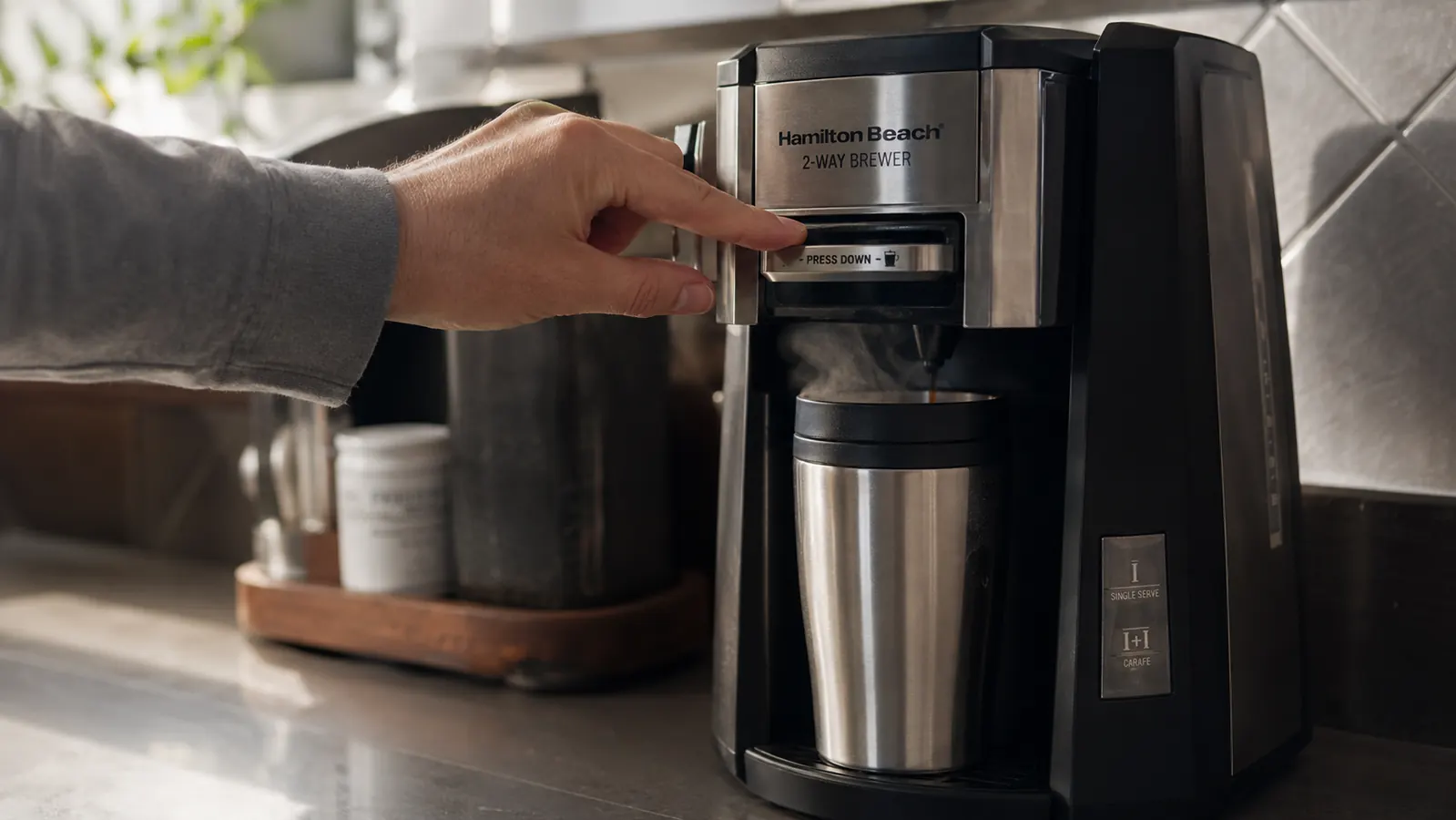
The single cup side and the full carafe side each take a different filter setup on the Hamilton Beach 2-Way Brewer. For a single cup, I use the removable single-serve filter basket that sits under the dedicated spout, usually with a scoop and a half of ground coffee for a mug that's strong enough to actually wake me up. For a full carafe, I switch to the standard basket filter in the main brew chamber and use about 10 to 12 tablespoons for a full pot, since Paul likes his coffee strong enough for a spoon to stand up in it.
I keep both filter types in the drawer directly under the machine, since three feet of usable counter means there's no room for anything to sit out unused, and I don't want to be digging through cabinets at 6:15am deciding between brewing a single cup and starting a full carafe.
I also keep two separate paper filter boxes stacked in that same drawer, one sized for the single-serve basket and one sized for the full carafe basket, because they aren't interchangeable and I learned that the hard way trying to force a full-size filter into the single-cup holder during my first week with it.
Step 3: Pick the Right Setting and Press Start
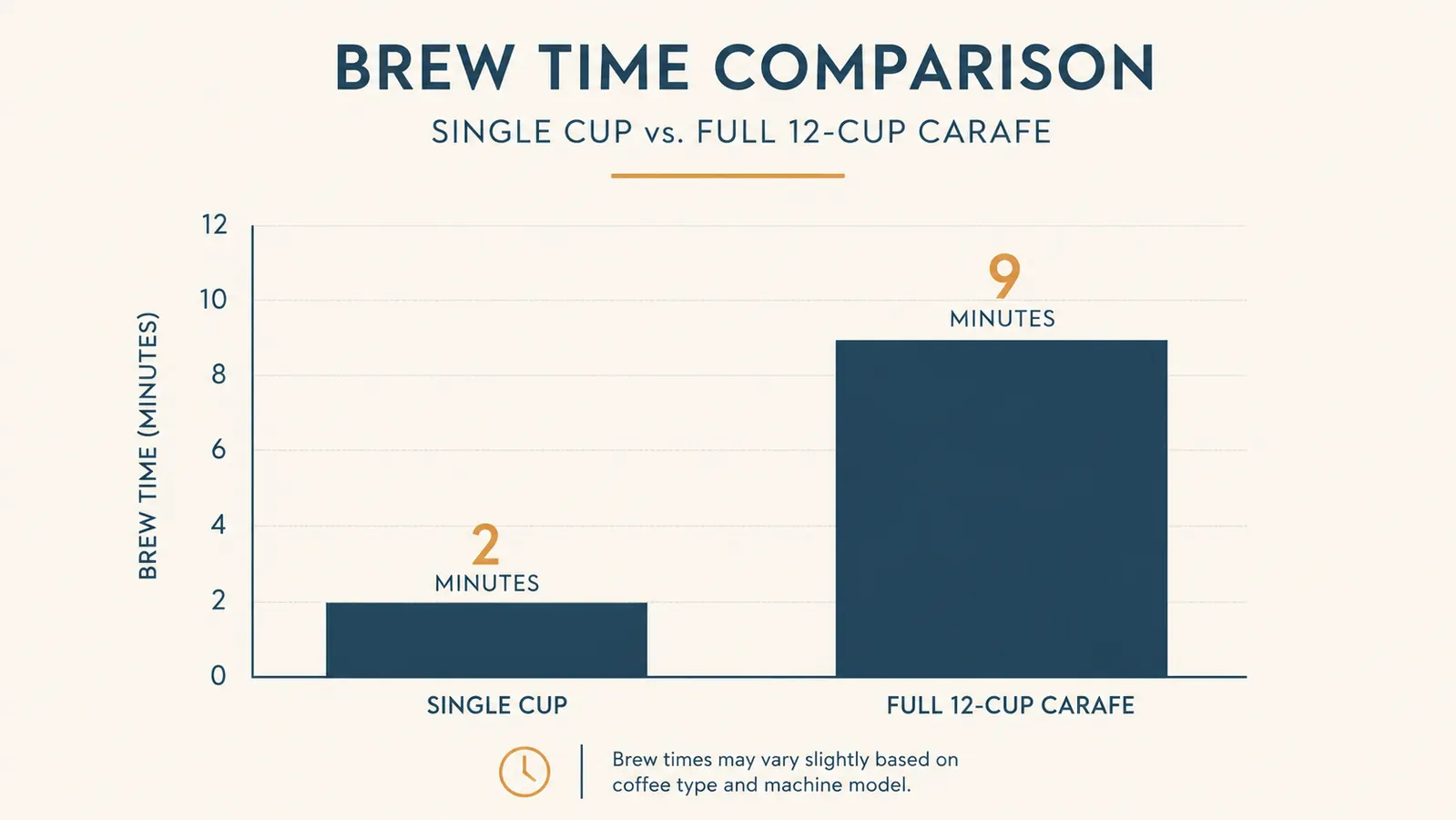
This is where the Hamilton Beach 2-Way Brewer actually earns the name, because a single cup and a full carafe use two different brew controls on the same machine. For a single cup, I use the dedicated single-serve lever, which pulls water only from the single-cup side of the reservoir and brews directly into whatever mug or travel cup I've set underneath, usually in under two minutes. For a full carafe, I use the main brew switch instead, which draws from the full water tank and brews the entire pot in about 8 to 10 minutes depending on how full I've filled it.
I've learned to double check that the mug or carafe is actually centered under the right spout before I press start, since brewing a single cup into an empty spot where the carafe should be is a mess I've made exactly once and never wanted to repeat.
When I know a full carafe is coming, like a Saturday with guests, I set everything up the night before, filter loaded, grounds measured, water in the tank, so all that's left in the morning is pressing the button on the full carafe side. On an ordinary weekday, I don't bother with that prep, since brewing a single cup only takes the two minutes it takes me to also pack Nora's lunch.

Step 4: Adjust Strength for a Single Cup vs a Full Carafe
Strength doesn't scale the same way between a single cup and a full carafe, and this took me a few tries in March to dial in. A single cup brewed fast and hot can come out weaker than you'd expect if you don't pack the single-serve filter a little fuller than you'd think, so I've settled on just over a full scoop for one strong cup. A full carafe, by contrast, has more time and more water moving through more grounds, so I can use a lighter hand per cup and still end up with a pot strong enough for the whole table.
If you're brewing a single cup for yourself and a full carafe for guests back to back, which happens most weekends in our house, don't use the same measuring habit for both. I keep a small scoop dedicated to single-cup brewing and a separate one for the full carafe so I'm not eyeballing it every time I switch.
It took me tasting a few too-weak single cups and one too-strong full carafe before I landed on these exact ratios, and I'd tell anyone new to a 2-way brewer to expect that same trial run. Write your ratio down somewhere the first week, because it's easy to forget which scoop size you settled on for a single cup versus a full carafe once the routine becomes automatic.
Step 5: Clean Between a Single Cup and a Full Carafe Switch
The last step is the one people skip, and it's the reason a lot of 2-way brewers end up smelling stale after a few months. Every time I switch from brewing a single cup to a full carafe, or the other way around, I rinse whichever filter basket I'm not using so old grounds don't sit and dry out in the machine. Once a week I run a cycle of equal parts water and white vinegar through the full carafe side to clear out mineral buildup, since our water runs a little hard here.
Five months of near-daily switching between a single cup and a full carafe hasn't left the Hamilton Beach 2-Way Brewer smelling like old coffee or running slow, but that's mostly because I stuck to this rinse habit instead of skipping it on busy mornings. For the longer rundown on how it's held up overall, I wrote about it in my full review of the Hamilton Beach 2-Way Brewer after five months of daily use.
I've also started descaling the full tank side once a month instead of waiting for the machine to tell me it's time, since I noticed a full carafe brew running a couple minutes slower than usual back in June, right around the time our water softener needed a salt refill. A single cup brew doesn't show buildup as fast, simply because it moves so much less water through the machine, but the full carafe side will tell on you if you let it go too long.
What Else Helps
A few small things make the switch between a single cup and a full carafe smoother in a kitchen with only three feet of usable counter. I keep pre-ground coffee in two separate containers, one labeled for single-cup strength and one for full-carafe strength, so I'm never guessing which scoop size I used last. I also leave the reusable single-serve filter sitting in a small dish next to the machine instead of putting it away, since I use it almost every weekday morning and losing thirty seconds hunting for it adds up over a school year.
I've started filling the full water tank the night before whenever I know Saturday morning means a full carafe for guests, so I'm not standing at the sink half awake measuring water while everyone's asking when coffee will be ready. And on weekdays when it's just a single cup, I've learned to grind or measure the night before too, since the actual brewing on the single-serve side takes barely any time at all once the grounds are already sitting in the basket. If you want the fuller case for why one 2-way machine beats owning two separate coffee makers, I laid it out in 10 reasons a family kitchen needs a 2-way coffee maker.
Once I stopped treating single cup and full carafe as two different routines and started treating them as two settings on the same machine, mornings actually got shorter, not longer.
One machine, one cup for you, one full carafe for everyone else.
If your kitchen doesn't have room for two coffee makers either, the Hamilton Beach 2-Way Brewer is the machine that's solved that exact problem in my house since March. Check today's price before you decide.
Amazon Check Today's Price on Amazon →