

Nobody hands you a warning label when you buy the Instant Pot Vortex Plus 6QT ClearCook Air Fryer that reads, your kitchen will smell faintly like burning dust for the first twenty minutes, and the end-of-cook beep is loud enough to wake an 8 year old sleeping at the other end of the house. I found out both of those things on my own back in May, the same week I set this up on our three feet of usable counter and expected it to behave exactly like the toaster oven it replaced. It didn't, not exactly, and three months of near-nightly use later, this is the review I actually want to write, not the polished one.
I already told the story of how this earned a permanent spot on our counter after Paul stopped being skeptical, in my long-term review after three months of weeknight dinners. This is not that article. This is the one where I tell you what actually annoyed me learning it, what the manual gets wrong, and who I've watched return this exact model, because a friend of mine who works the return counter at our local store told me why.
The Quick Verdict
It's a genuinely good appliance once you get past a real learning curve and a handful of annoyances that nobody mentions in the marketing, including a manual with cook times that run short and a beep loud enough to wake a sleeping kid.
Amazon Check Today's Price →Wondering what the shiny five-star reviews leave out?
This is what three months of actual daily use looks like, condensation and all. If you've read the glowing version and want the honest one before you buy, check today's price and current availability while you decide.
Amazon Check Today's Price on Amazon →How I Actually Tested This
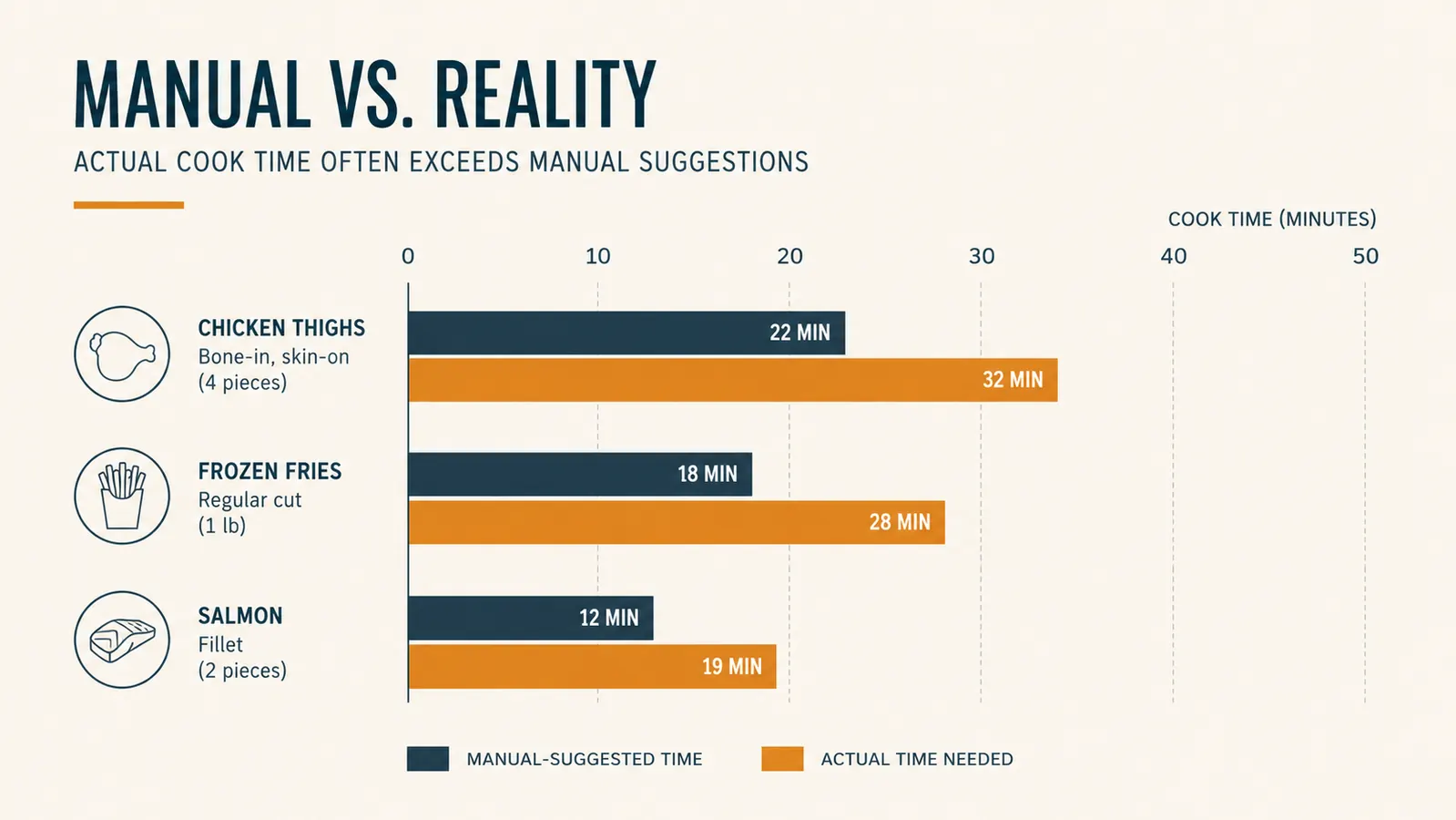
The manual that comes in the box has a cook chart printed on the inside cover, chicken thighs at 380 degrees for 18 minutes, frozen fries at 400 for 15. I followed that chart exactly for the first four nights, and got soggy-centered fries twice and chicken thighs that needed another 6 to 8 minutes past what the chart promised almost every single time. That's not a defect, it's just a generic chart trying to cover every kitchen and every brand of frozen food, but nobody tells you upfront that you should expect to add time for the first two weeks while you figure out your own unit's actual behavior.
By week three I'd stopped trusting the chart entirely and started keeping my own index card taped inside the cabinet above it, with the real times that worked for our specific brands of chicken thighs and fries. That's the honest testing process behind this review, not a single week of note-taking, but three months of small corrections until the numbers on my card stopped needing updates.
Salmon was the food that took me the longest to get right. The manual doesn't mention fish at all, so I started by guessing off the chicken chart and overcooked two fillets in a row before I landed on a lower temperature and a shorter time than I would have ever guessed on my own. If you're buying this specifically to cook fish, plan on a few imperfect dinners while you find your own numbers, because there's no printed guidance to lean on.
I also want to be upfront that I didn't test this in a lab or against a stopwatch for a magazine spread. I tested it the way most people actually will, tired on a Tuesday, one eye on Nora's homework, hoping dinner comes out right the first time and adjusting when it doesn't.
The Steam, the Smell, and the Beep Nobody Mentions
The first time I ran it empty to burn off the manufacturing residue, the way the included instructions recommend, our whole galley kitchen smelled faintly like a hot electronics store for about twenty minutes. I cracked the window even though it was a cool May evening, and it cleared out fine, but if I hadn't read that step in the fine print I would have assumed something was wrong and unplugged it out of nerves.
The bigger surprise was the end-of-cook beep. It's loud, genuinely loud, loud enough that it woke Nora from a nap on the couch one Saturday afternoon when I ran a batch of fries while she was sleeping fifteen feet away in the next room. Our old toaster oven had a soft click when the timer ended. This has a beep closer to a smoke detector's chirp, repeated three times, and there's no way I've found to turn the volume down.
None of this is a deal breaker in our house. But if you have a baby who naps in a bassinet near the kitchen, or you work night shifts and sleep during the day, that beep is worth knowing about before it surprises you the way it surprised me.
Water Where You Don't Expect It
Condensation pools in the bottom of the drawer more than I expected, especially after cooking anything with real fat content, salmon fillets and bacon are the worst offenders. Pull the Instant Pot Vortex basket out too fast after a cook and you'll get a small puddle sliding toward the edge of the drawer, which has splashed onto our counter and once onto the floor near Jack's socked feet. I've learned to pull the drawer out slowly and set it flat before lifting the Instant Pot Vortex basket, but that's a habit I had to build, not something the manual walks you through.
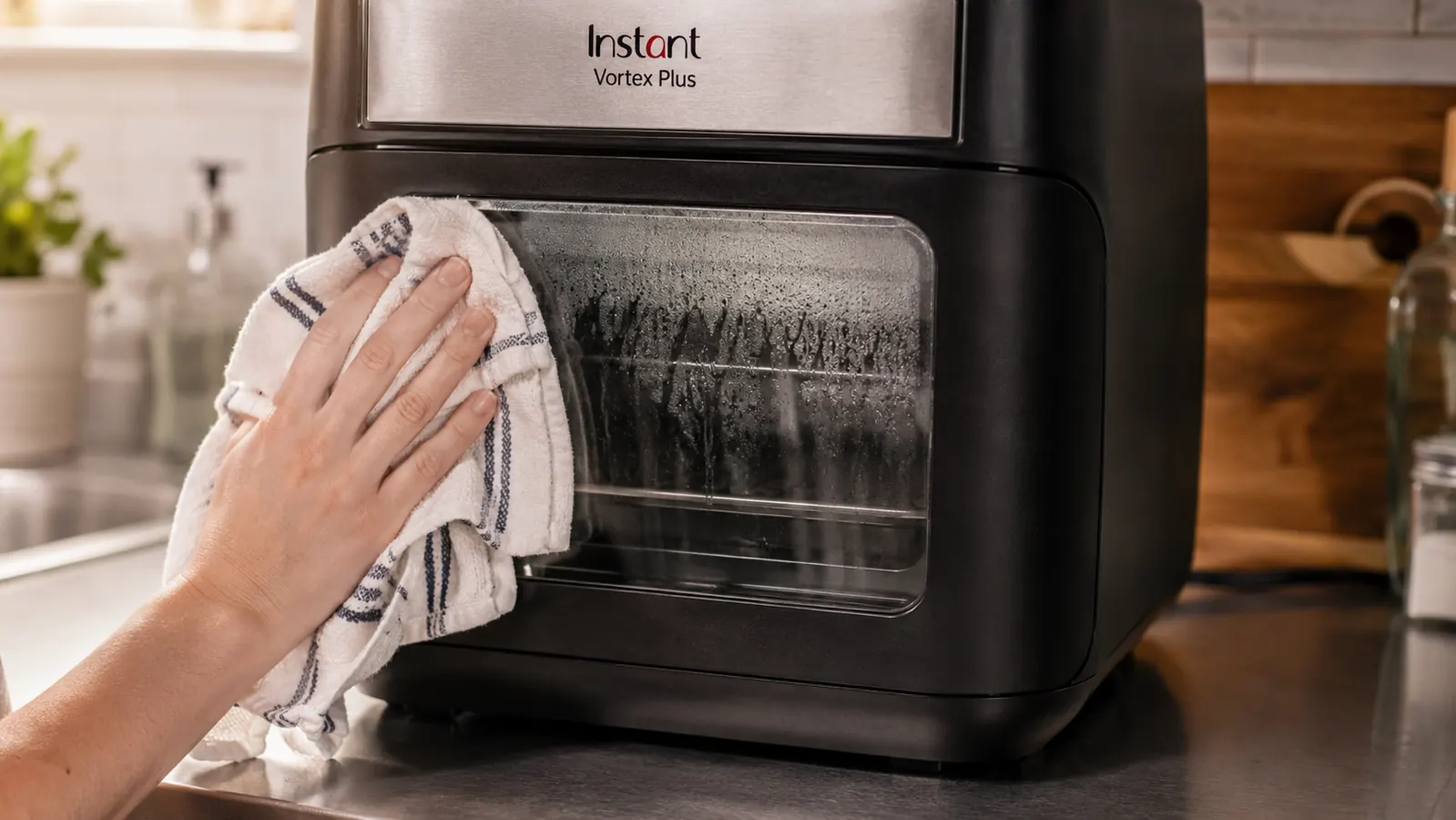
The fix I landed on, after the second spill, was keeping a folded dish towel on the counter next to the Instant Pot Vortex at all times, the way some people keep one next to the stove for a splattering pan. It sounds like a small thing, but it's the kind of small thing that would have saved me two mop-ups in the first month if someone had just told me to expect it.
The clear windows I love for checking food without opening the drawer also fog up with a light grease haze after a few cooks in a row, particularly on bacon nights. It wipes off easily with a damp towel, but if you're expecting the window to stay showroom-clear the way it looks in product photos, it won't, not without regular wiping.
The Basket Isn't Quite as Tough as the Marketing Suggests
In week two, before I knew better, I used a pair of metal tongs to flip some chicken tenders mid-cook and left a small scratch mark near the hinge edge of the Instant Pot Vortex basket. It hasn't affected how food releases, and the rest of the coating still looks and performs fine three months in, but that one corner is a visible reminder that nonstick doesn't mean scratch-proof. I switched to a silicone-tipped tool after that and haven't had a repeat, but it would have been nice if the included instructions had said so plainly instead of a small icon on the underside of the basket I didn't notice until I went looking for it.
The crisper tray that sits inside the basket is also easy to misplace once you've washed it a few times and it's drying loose on the rack instead of nested where it belongs. We lost track of ours for about a week in June, cooked without it, and noticed the texture on fries wasn't quite as even until Jack found it behind the colander. It's a small piece, and nothing in the box tells you to give it a dedicated spot, so now ours lives clipped to the basket handle with a binder clip, which is not an elegant solution but it works.
Storage Weighs on You More Than the Countertop Space Does
Everyone talks about the counter footprint. Fewer people mention that this thing is genuinely heavy to lift with one hand, closer to 12 pounds than a toaster oven's usual weight, and there's no real handle built for carrying it. On the two occasions we've needed the extra three feet of usable counter back, for a holiday when Paul's parents visit and we need the full stovetop and prep space, moving it to the top of the fridge is an awkward two-handed lift, not a quick slide like our old toaster was.
If your plan involves tucking this away between uses rather than leaving it out permanently, budget for that effort, and think honestly about whether you have a spot at counter height or below to store it. Lifting 12 pounds up onto a high shelf every single day isn't something most people will keep doing past the first week, which is part of why it ends up living out permanently in a lot of small kitchens, ours included.

Why People Actually Return This One
My friend who works the returns counter at our local big box store told me the pattern she sees with this exact model. The most common reason isn't that it cooks poorly, it's that buyers expected app or Bluetooth control and this one is dial and button only, no phone syncing at all. If you were picturing starting dinner from your phone on the drive home, that's not what this does.
The second most common reason is noise and size for people living alone or in a studio kitchen, where even our three feet of usable counter would feel generous. A single person cooking one chicken breast doesn't need a 6-quart basket, and the fan noise that barely registers in our house with four people talking at dinner is a lot more noticeable in a quiet one-bedroom apartment. I looked at exactly this tradeoff, capacity against footprint and noise, in my side-by-side comparison against a Ninja air fryer, if you want real numbers instead of secondhand return-counter stories.
The third reason, and the one that surprised me least after living with it, is buyers who assumed all six functions would be equally strong. The crisp and roast functions are genuinely good. The dehydrate function is slow and, in my one attempt at apple chips with Nora, took most of an afternoon for a modest result. If someone bought this specifically to replace a dedicated dehydrator, I understand why they'd send it back disappointed.
The fourth reason is a little more about expectations than the appliance itself. Some buyers hear crisps like deep frying and picture the exact texture of a restaurant fryer basket, oil and all. It gets close, closer than any oven I've used, but it isn't identical, and if a customer's whole decision hinged on that one-to-one comparison, my friend said those are often the returns that come with a note about the texture not quite matching what they hoped for.
What I Liked
- Once you learn its real cook times, results are consistently crisp and reliable
- 6-quart capacity genuinely fits a family dinner without a second batch
- Clear windows let you check progress, though they need occasional wiping
- Coating still performs fine three months in, one cosmetic scratch aside
- Crisp and roast functions are strong enough to use nightly without complaint
Where It Falls Short
- Manual's printed cook times run short, expect a two week adjustment period
- End-of-cook beep is loud enough to wake a sleeping child in the next room
- Condensation pools in the drawer and can spill if you pull it out too fast
- No app or Bluetooth control despite what some buyers expect going in
- Heavy enough that moving it for storage is a real two-handed task
- Crisper tray is small and easy to misplace without a dedicated spot
- Dehydrate function is slow and underwhelming compared to a dedicated dehydrator
It took one soggy batch of fries and a scratched basket corner before I stopped trusting the manual and started trusting my own eyes.
Who This Is For
This is for a household willing to tolerate a real, if short, learning curve in exchange for capacity and reliability once you're past it. If you're cooking for three or more people most nights and you can live with a loud beep and a couple weeks of adjusting cook times off the printed chart, the payoff is worth the friction. It's also fine for anyone who already expects a countertop appliance to need occasional wiping and doesn't need phone control to feel like they got their money's worth.
It's also a good fit if you're the type of cook who keeps a running mental list of substitutions and adjustments anyway, the kind of person who already scribbles notes in cookbook margins. That instinct transfers directly here, and within a month you'll have your own reliable numbers the way I did.
Who Should Skip It
If you're cooking for one person in a quiet apartment, the noise and the size will bother you more than the capacity will ever help you, and a smaller unit will serve you better. Skip it too if you specifically want app control, a near-silent finish beep for a household with a light sleeper nearby, or a dehydrator that can genuinely replace a dedicated one. None of those are flaws exactly, they're just mismatches between what this appliance actually is and what certain buyers expect it to be.
And if you're someone who returns things the moment week one doesn't go perfectly, be honest with yourself before you buy. The people I've heard were happiest with this a year in are the ones who gave themselves that same two week adjustment period I did, rather than judging it off the first soggy batch of fries.
Still deciding after the unfiltered version?
Every appliance has quirks once you actually live with it, and this one earned its spot on our counter despite its beep and its learning curve. If the tradeoffs sound like ones you can live with, check today's price before it changes.
Amazon Check Today's Price on Amazon →