
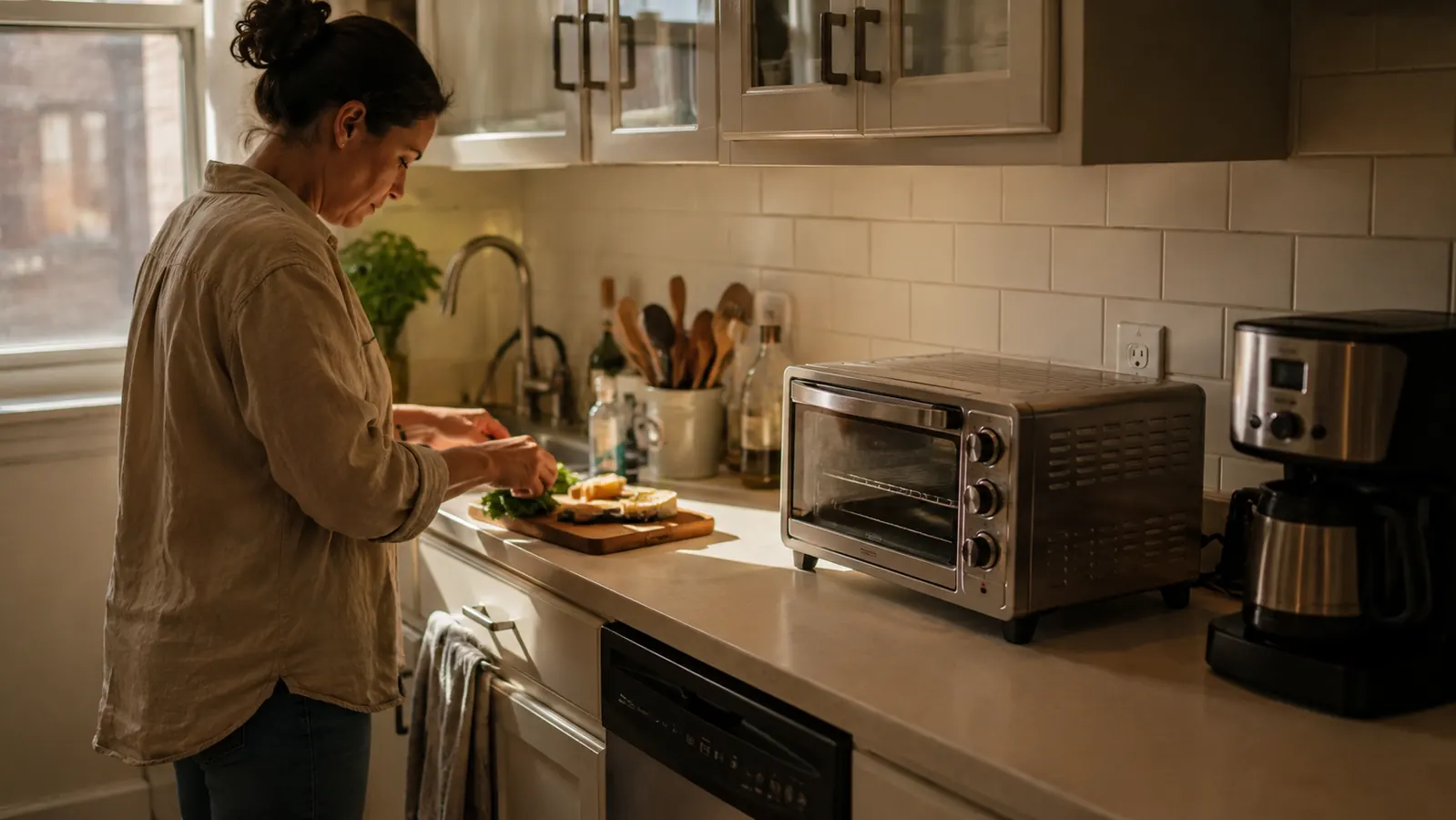
Three feet of usable counter means every appliance in my kitchen has to prove it deserves to stay plugged in. That's the space I've cooked in for nine years now, a real galley kitchen where the coffee maker, whatever's cooking for dinner, and one more appliance are always competing for the same stretch of laminate. Back in February I brought home the Cuisinart Custom Classic Toaster Oven Broiler, the TOB-40NNAS, mostly because I was tired of preheating our full-size oven for fifteen minutes just to toast four bagels or warm up a single plate of leftovers. Six months later, it's still sitting on that counter, and in my house that means something.
My husband Paul wasn't sold on it right away. We already owned a two-slot toaster, and his first question was why we needed something bigger and pricier just to make toast. It's a fair question, and it took me about three weeks of actually using the thing before I had a real answer for him. This is what changed after six months of near-daily use, not what I hoped would change while it was still sitting in the box on the kitchen table.
The Quick Verdict
After six months of daily use in a small galley kitchen, this toaster oven earned its spot by quietly taking over toast, broiling, and small-batch baking from our full-size oven, even though the drip tray and dial timer take some getting used to.
Amazon Check Today's Price →Tired of heating up a full oven just to toast four bagels or reheat one plate?
That's exactly the problem I was solving for back in February. The Cuisinart Custom Classic toasts, bakes, and broils on its own dial, without you ever touching the big oven for a small job. See today's price and current availability before you decide.
Amazon Check Today's Price on Amazon →How I've Used It
I didn't buy this to replace our full-size oven. I bought it because on a Tuesday morning in late January I ran the big oven for twenty minutes just to warm four bagels for Jack and Nora before school, and standing there watching the dial climb for that long, for four bagels, felt like the dumbest use of our gas bill I could think of. I wanted something I could switch on, walk away from for two or three minutes, and trust to toast evenly without babysitting it.
The toaster oven has run something almost every single day since. Mornings are bagels and toast, five days a week, sometimes six if Saturday soccer starts early. After that it's reheating leftovers for lunch, since a slice of cold pizza actually comes out crisp on the rack instead of soggy from the microwave. A few nights a week I broil salmon or chicken breasts for Paul, who's been trying to eat cleaner since the spring, and on Friday nights I bake a personal-size pizza for whoever doesn't want what the rest of us are having.
I lean on the toast and broil settings the most, with bake close behind for small dishes, a single sweet potato, a personal mac and cheese, half a dozen dinner rolls when I'm not making a full batch. The warm setting gets used more than I expected too, mostly to hold rolls or a side dish while the rest of dinner finishes on the stove.
What's Actually Different About the Broil and Bake Settings
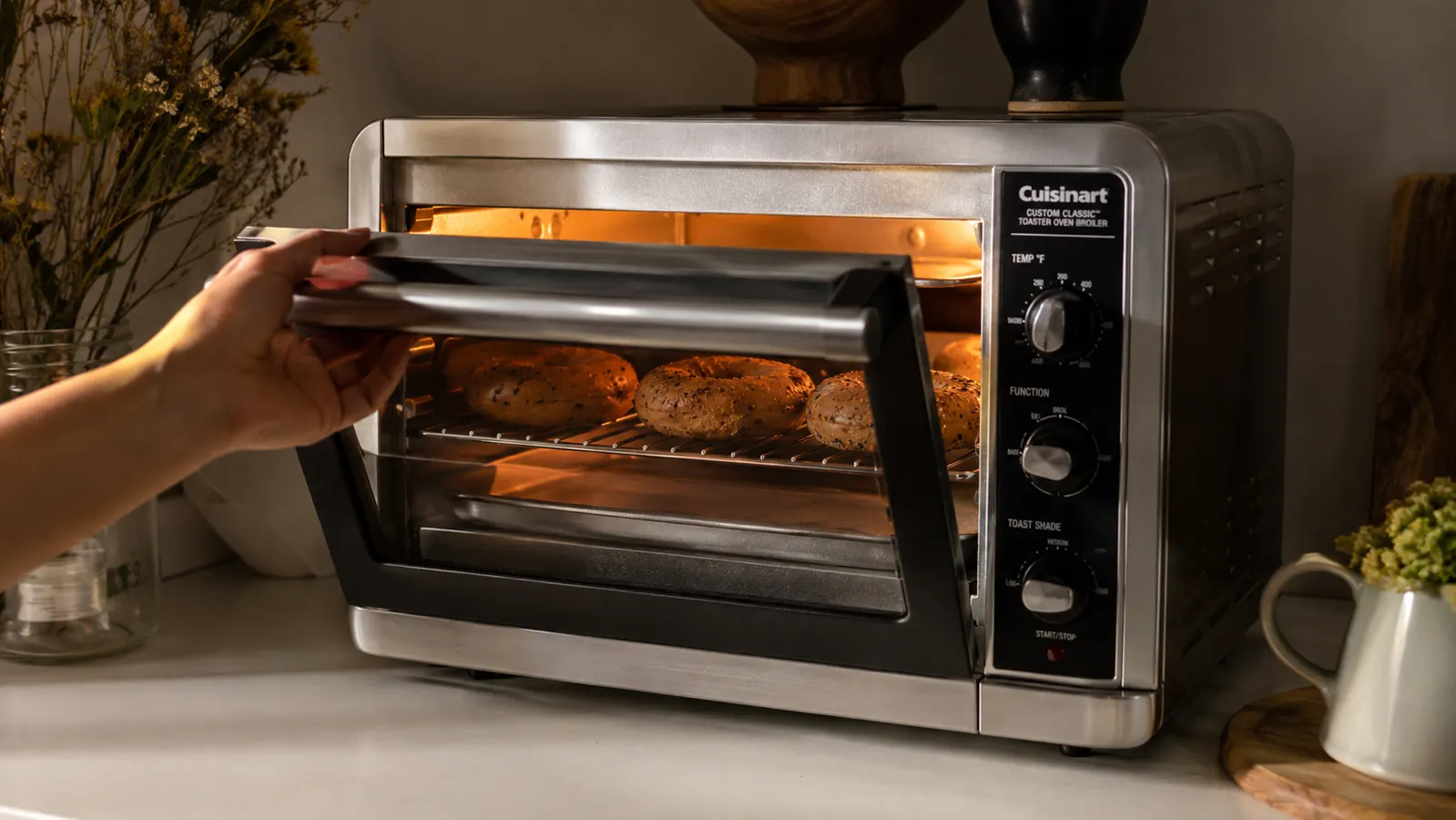
The glass door and interior light are the feature I didn't think I'd care about, and now genuinely rely on. I can see the toast browning or the salmon crisping without opening the door and losing the heat inside, which matters more than people think, since every time you crack that door mid-cook you're adding time back onto the whole cycle. With Jack and Nora usually underfoot at breakfast, being able to glance over from the counter and see the bagels actually turning golden, instead of guessing and pulling the drawer open, has saved more than a few slightly burnt mornings since February.
The interior holds a 9-inch pizza or four slices of bread side by side, which in real terms means I can toast breakfast for both kids at once instead of running two batches back to back. That's the number that actually matters if you're feeding more than one person before the school bus shows up. I laid out the full capacity and footprint comparison in my side-by-side against our full-size oven, and the honest answer is this one wins on small jobs and loses on anything that needs to feed all four of us at once.
It runs on a mechanical dial instead of a digital display, which I actually like more than I expected to. There's no menu to scroll through and no beeping control panel to teach the kids. You turn the function dial to toast, bake, broil, or warm, set the timer dial, and it's exactly as complicated as it looks. The tradeoff is that the timing isn't as precise as a digital countdown, so the first few weeks I ran things a minute or two longer or shorter than I meant to before I learned how our specific unit actually behaves.
On texture, the broil setting gets closer to what our full oven's broiler does than I expected from something this size. Salmon skin crisps up nicely without drying out the fillet, and chicken breasts brown on top the way they should, though I overcooked the first two batches by a few minutes before I figured out this unit runs slightly hotter than the dial numbers suggest. Toast comes out evenly golden edge to edge, which our old two-slot toaster never managed, it always left the middle pale no matter what setting I used.
Six Months In: What Actually Changed on a Weeknight
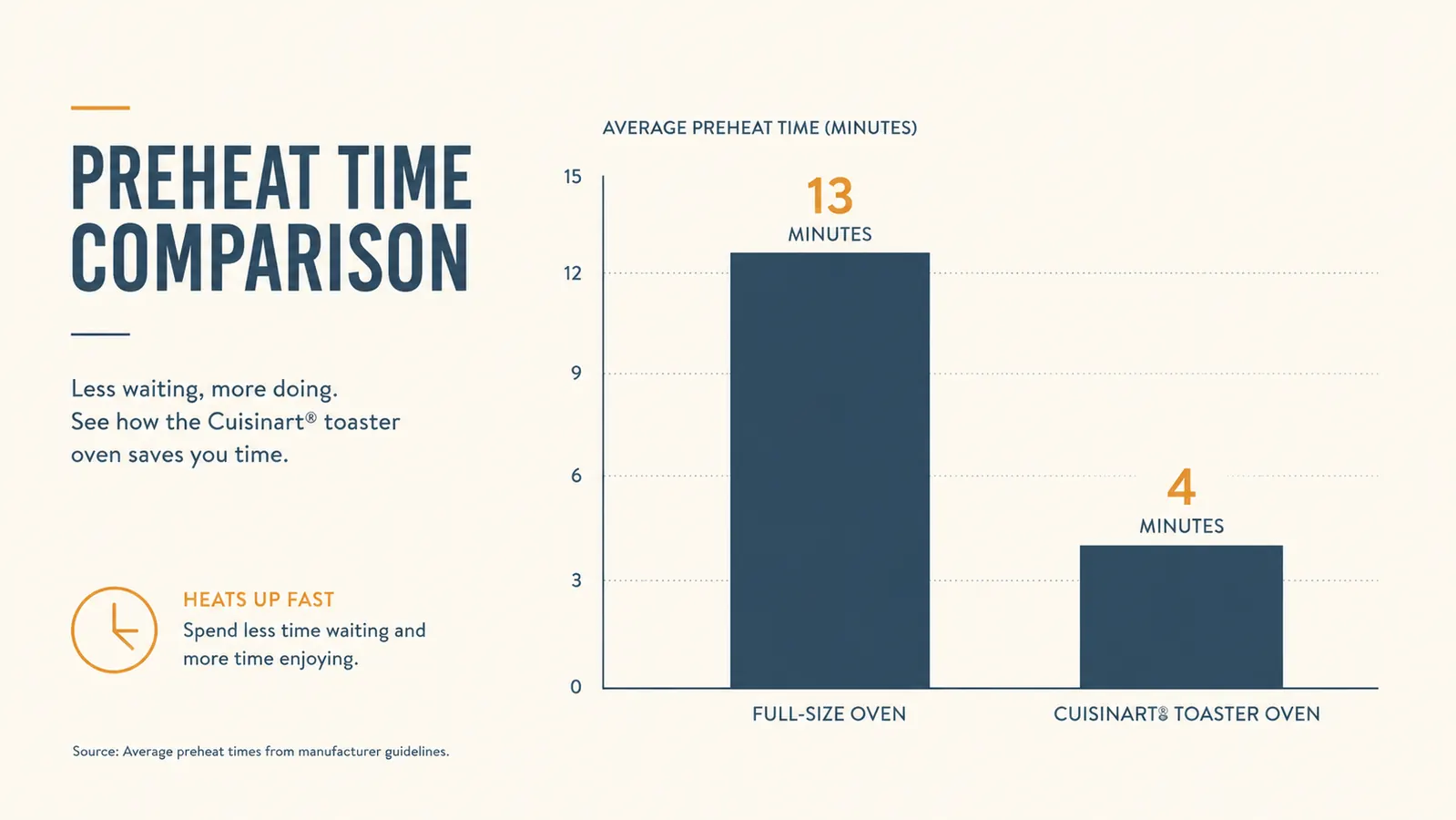
The honest answer is that our full-size oven barely runs on weeknights anymore unless we're cooking for all four of us at once. I used to flip that dial the second I walked in the door, before I'd even decided what we were eating, because a full oven takes twelve to fifteen minutes just to hit temperature. Now anything for one or two people, a couple of chicken breasts, a small tray of vegetables, reheated dinner, goes straight into the Cuisinart toaster oven, which is ready in about four minutes.
The other change is that our kitchen doesn't heat up nearly as much on a warm evening. Running the full oven for twenty minutes in a small galley kitchen with three feet of counter and not much airflow used to make the whole room uncomfortable by six o'clock in the summer. This countertop unit puts off noticeably less ambient heat for the smaller jobs, and that mattered more to me in July and August than it did back in February when I bought it.
What hasn't changed is cleanup around the crumb tray. It slides out from the bottom and needs to be emptied and wiped down most days, since bagel crumbs and the occasional dripped cheese from a personal pizza build up fast, and that's maybe five extra minutes at the sink I didn't have before. Six months of near-daily use hasn't shown any wear I'd worry about yet, the heating elements glow evenly, the door hinge still closes with the same solid click it had in February, and the dial hasn't started sticking the way I half expected a mechanical control to after this much use.
Where It Struggles in a Three-Foot Kitchen
It's not a small appliance, even though it's called a toaster oven. It takes up real footprint on our three feet of counter, and for us that meant the coffee maker moved to the top of the refrigerator, coming down each morning and going back up at night. If you don't have somewhere for something else to go, fitting this in is going to be a real negotiation with your counter, not a quick swap.
The 0.5 cubic foot interior is also a real limit, not just a spec sheet number. It's genuinely useful for toast, broiling, reheating, and small-batch baking, but it will never fit a whole chicken or a full sheet pan of anything, and I stopped trying to ask it to do that within the first month. And the mechanical timer dial, while I've come to appreciate its simplicity, means you're relying on your own memory more than a digital countdown that beeps at you, which has cost me a slightly overdone batch of toast more than once when I got distracted helping Nora find a missing shoe.
Noise is a minor tradeoff worth naming honestly. The dial has a mechanical tick as it counts down, noticeable in a quiet kitchen during an early morning before anyone else is awake. It's not loud, but if you're used to a silent digital appliance, you'll hear this one working.
Is It Worth the Current Price
I'm the one who checks the receipts in our house, and I don't bring home a new appliance without doing the math on whether it earns its keep. At its current price, this isn't an impulse buy, it's a real line item, and I weighed it against what we were spending running the full oven for jobs that never needed a full oven in the first place. Between the extra gas from short-job preheats and the amount of counter space the coffee maker gave up to make room, six months of near-daily use has more than justified the purchase for us, but I'd still tell anyone to check today's price before deciding, since it does move around with promotions.

What I Tried Before This
Before the Cuisinart, we just used our full-size oven for everything, toast included, which is embarrassing to admit but true. We also owned a basic two-slot toaster that handled bread fine but couldn't broil, bake, or warm anything, so it never solved the actual problem of small jobs eating up big-oven time and heat.
I looked at a couple of other countertop ovens before landing on this one, mostly comparing interior capacity and whether the controls were digital or mechanical, since I wanted something Jack could eventually operate on his own for a snack without a confusing control panel. If you want the fuller side-by-side against just leaning on your existing oven, I wrote up how it stacks up against a full-size oven in more detail.
What I Liked
- Toasts four slices of bread or a 9-inch pizza in one batch without running two rounds
- Preheats in about 4 minutes, versus 12 to 15 for our full-size oven
- Glass door and interior light let you check food without losing heat mid-cook
- Broils salmon and chicken close to what our full oven's broiler does
- Simple mechanical dial, no digital menu, easy for kids to eventually learn
- Held up through six months of near-daily use without any visible wear
Where It Falls Short
- Takes up real counter space, something else has to move to make room
- 0.5 cubic foot interior will never fit more than small-batch jobs
- Crumb tray needs emptying most days or it builds up fast
- Mechanical timer dial is less precise than a digital countdown
- Runs slightly hotter than the dial numbers suggest, took a few tries to dial in
- Audible mechanical tick from the timer in an otherwise quiet kitchen
Somewhere around month two I stopped calling it the toaster and started calling it the little oven, which is when I knew it had actually earned its spot.
Who This Is For
This is built for a household that's tired of firing up a full-size oven for jobs that don't need one, toast, a couple of chicken breasts, reheated leftovers, a personal pizza. If your kitchen runs small like ours and you're already rationing counter space, this one is worth the negotiation because it takes real work off the big oven's plate on an ordinary weeknight. I put together 10 reasons a toaster oven earns its spot on a small counter if you want the fuller case before you decide.
Who Should Skip It
If you're cooking full meals for a crowd most nights, this won't replace your full-size oven, and you'll be disappointed if you expect it to. And if your counter is already at capacity with nothing willing to move, be honest with yourself before you buy, since this one needs a real spot, not a leftover corner between the sink and the wall. For the unfiltered version of where it comes up short, I laid it all out in my honest review after six months of real use.
Six months of mornings in, this is the appliance our full oven barely misses.
If your weeknight routine looks anything like ours did back in January, a full oven running twenty minutes for a job that didn't need it, it might be worth checking today's price while it's still in stock.
Amazon Check Today's Price on Amazon →